Dig Deeper into Sunday’s Gospel: Read John 6:51–58
This past weekend found me stress cleaning my house and chasing my 7-year-old around our church while her first Communion veil repeatedly slipped out of her hair. Caroline, our peaches and cream middle daughter, had the joy of receiving her first Communion with several of her closest friends and cousins. On days like this, it’s easy to get swept up in the dress, the party, and the obligatory photos, but the quiet miracle of the day is hidden in the unassuming host we have the privilege of consuming.
In this Sunday’s gospel, John recounts Jesus telling the Jewish crowd that He is “the living bread that came down from heaven; whoever eats this bread will live forever; and the bread that I will give is my flesh for the life of the world” (John 6:51). What happens next is significant: the crowd argued amongst themselves, wondering how this can be? Can Jesus possibly mean what He just said? They must have misunderstood.
This is when Jesus doubles down. He reiterates, not only did the Jewish crowd hear Him right, in fact, if you don’t eat and drink His flesh and blood, “you do not have life within you” (John 6:53). Jesus repeats the same message over and over in this passage so the listener cannot possibly mistake His intent: I mean exactly what I say.
What’s more, Bishop Robert Barron explains in the Word on Fire Bible, “The Greek term behind ‘eat’ here is not the usual phagein but rather trogein, a word customarily used to describe the way animals devour their food … Jesus says essentially, Unless you gnaw on my flesh … you have no life in you.”
So the crowd cannot take these words as Jesus waxing poetic.
This is insane, right? Place yourself in this scene: you are a devout Jew who has left His home to follow a man who is unlike any other. He is the Messiah, the Savior who will finally redeem Israel. You’ve seen Him cast out demons, heal the sick, and preach with authority. You trust Him.
How could He say we must eat His flesh?
Just as Jesus’ claim to be the Son of God must be either completely true or completely false, so His assertion that to have divine life, we must eat His flesh and drink His blood is either cannibalistic nonsense, or it must be so.
There is no middle ground with Christ: He either is who He says He is, and His teachings are true, or He’s insane. Or a liar. This saying is the hardest of all Jesus’ teachings. His preaching on morality, theology, and worship is of vital importance. But this teaching is at the center of it all, and is especially hard for a first-century Jew to accept because they believed that life was in the blood. And as such, it was Old Testament law that they were never to consume the blood of an animal. Jesus’ words here are seemingly problematic, and yet, they demand a response: to obtain eternal life, we must consume Him.
But Jesus knows what we need.
We just celebrated Pentecost, the birthday of the Church, where God sends down the Holy Spirit upon the apostles, who move from cowering in the upper room to boldly proclaiming the gospel of Christ to all nations, even at the cost of their lives. Jesus, anticipating the needs of His sheep after His ascension, is ever the provider. He would “never leave us orphans”(John 14:18), but provided not only the Paraclete, the Advocate, but also food for the journey. Not the manna which God gave to their forefathers in the desert, which they ate and still died. But the Living Bread which came down from heaven: His very self.
And He risked everything to do so. After this gospel passage, John goes on to tell us that after hearing this teaching, many of the disciples who had been following Jesus turned their backs and went home. They went back to their former way of life; they abandoned the teacher whom they had been convinced, up to that moment, was the Messiah and worth leaving everything behind for.
And this, more than anything, is proof of the Real Presence in the Eucharist: Jesus didn't run after those who walked away. Not because He doesn’t pursue us to the ends of the earth to reveal Himself to us, but because Jesus cannot contradict Himself. His Word speaks ideas into being, and in a culture obsessed with “my truth,” Jesus insists there is a better way: the Way. And it is Jesus in the Eucharist.
So why would the Good Shepherd, who always tends His flock, not race after those who walked away from Him in this moment?
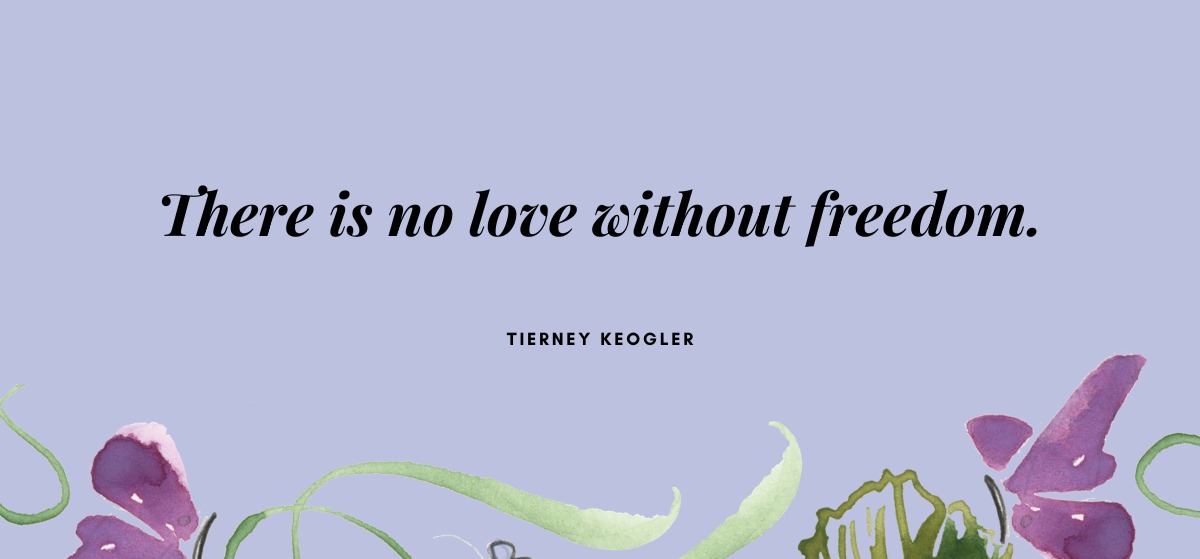
Because there is no love without freedom.
In the end, it is our choice how we respond to God’s invitation.
It’s true, dear sisters, that we don’t find ourselves in this first-century crowd hearing Jesus preach this message firsthand. But we have been gifted the Church, which has passed down the Mass, celebrated on every altar across the world, where the words “This is my body … this is my blood, given up for you” are spoken to us. And we have the unimaginable privilege of consuming Jesus Himself, truly present, in the Eucharist.
What utter humility our Savior has.
He becomes the Living Bread so we can feed on the source of life.
He empties Himself so we can be filled.
He is broken and shared so that we can become whole.
We, too, are invited to “taste and see that the Lord is good” (Psalm 34:8). We have the opportunity every day to partake in heaven while on earth, to consume Living Bread for the journey to eternal life.
With you in the breaking of the bread,
Tierney
Food for thought or journaling …
Is this a Scripture passage you find challenging to accept? Is there a word or a prompting you feel the Spirit putting on your heart? How is the Lord taking you deeper into His Word?
Jesus, thank You for the gift of Yourself in the Eucharist. Help me to receive the grace of this sacrament in its fullness and so become a living tabernacle for You. Help me to carry You into every room I enter. Amen.
P.S. Want to dive in deeper? For more on Jesus’ teaching on the Eucharist, check out Lesson 7 in the Bible study, Touching the Divine.