Dig Deeper into Sunday’s Gospel: Read Matthew 5:1-12
In the third grade, my son had a project about the beatitudes. His task was simple: memorize all eight beatitudes from Matthew 5 and recite them in order. For a nine-year-old, that is a tall order!
Because he inherited a healthy dose of competitive spirit from his father, he accepted the challenge head-on. He put in the time, did the work, and aced the test. While we celebrated his accomplishment, I asked him, “So, what do the beatitudes even mean?” He looked at me with total honesty and responded, “I have no idea. But I have them memorized!”
The Sermon on the Mount
In this weekend's gospel reading, Jesus begins the Sermon on the Mount, a collection of His teachings. On a hilltop overlooking the Sea of Galilee, thousands upon thousands of people gathered to hear Jesus. People flocked to listen to Him—weary, struggling, hungry—and Jesus responded with profound love. He spoke directly to the deepest longings of every human heart, as if they were asking: How should I live? How do I find true happiness? His response has come to be known as the beatitudes.
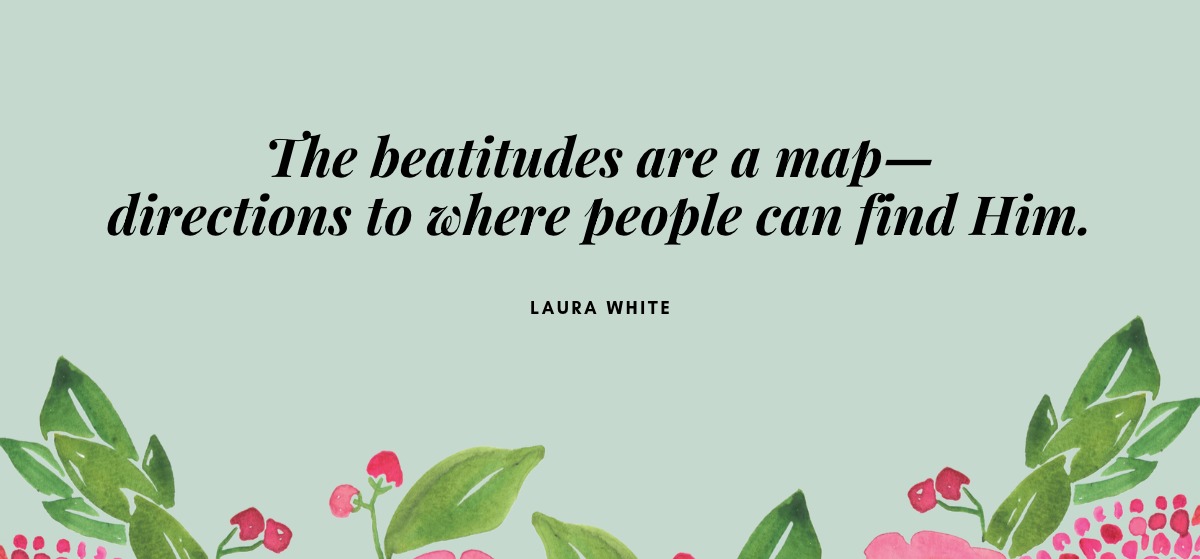
The historical drama The Chosen powerfully portrays the scene in which Jesus is preparing to give the Sermon on Mount (from episode 8 of season 2—which my son loved, and I wholeheartedly recommend). When the disciple Matthew asks Jesus why He wanted to share this specific message with His followers, Jesus responds by saying that the beatitudes are a map—directions to where people can find Him. He tells Matthew that when people are looking for Him, they will look for the people that He describes.
The beatitudes were designed so that the world can locate the living God by looking at His disciples. Jesus taught with divine authority, but He wasn’t giving us a checklist of moral perfection to earn His love. He was offering an invitation to transform our hearts to look more like His.
Built for Happiness
It is easy to look at the beatitudes as a list of behaviors to memorize—behaviors that seem unattainable, unreasonable, or even as raining on our parade. But when we encounter Jesus’ words, we have to remember the character of our heavenly Father. God does not just desire behavior modification; He desires that we live in abundance. He is a good Father who created us for joy.
We are, in fact, built with an innate desire for happiness. The Catechism of the Catholic Church tells us that our desire for happiness is of divine origin (CCC 1718). God placed that desire inside us on purpose. The real struggle we face every day isn’t that we want to be happy—it’s where we look to satisfy that longing.
We continually tell ourselves:
I’ll be happy when I find “the one”—or when my marriage is finally conflict-free.
I’ll be happy when the number on the scale drops.
I’ll be happy when I am on vacation.
I’ll be happy when the house is clean and perfectly organized.
Yet, even when we achieve every goal, a lingering restlessness remains. We find “the one,” but we are surprised when he doesn’t live up to our expectations perfectly. The number on the scale is achieved, but the feeling of emptiness remains. The vacation is relaxing, but the restlessness returns after the flight home (and don’t get me started on the house being clean and organized—it never stays that way).
He Alone Satisfies
There is a divine reason that our desire for happiness isn’t fulfilled by the things of this world. God placed the desire for happiness within the human heart in order to draw man to the One who alone can fulfill it (CCC 1718). We are created with a God-shaped hole in our hearts that only He can satisfy. The things of this world can make us happy for a moment, but we are called for more.
The beatitudes are God’s response to our desire for happiness. Looking past just a list of behaviors, we can find God’s sharing of His divine life and His nature with us. It is in the beatitudes that God desires to share the keys to happiness and show us how to follow Him.
What Jesus offers runs entirely counter to the cultural noise we absorb daily. The world measures success by visible achievements, personal autonomy, status, and self-reliance. It tells us to assert our rights, build our personal brands, and rely on our own strength to secure happiness. But Jesus dismantles this framework entirely when He explains the attitudes of the heart that He calls “blessed.” His disciples won’t look like people seeking happiness in the world, absorbed in grasping for control, or promoting their own strength and identity. Those who follow the beatitudes will look more like Him.
Reimagining the Beatitudes
Jesus says we are blessed when we are poor in spirit, with hearts that humbly seek the Lord in utter dependence. We acknowledge our own weakness before Him, opening the door for His grace to rush in.
Jesus says we are blessed when we are meek, possessing strength under control. Meekness isn’t passivity or weakness; it is a heart grounded in deep humility that chooses trust over control.
Jesus says we are blessed when we hunger and thirst for righteousness, and that we will find satisfaction in Him. The desires of this world leave us searching for more, but the soul that hungers for God’s holiness and truth will always be satisfied.
Jesus says we are blessed when we are merciful, an attitude that flows directly from remembering how deeply we’ve been offered mercy ourselves. Even when we feel entitled to hold a grudge or demand justice, knowing in our bones that Christ has forgiven and redeemed us makes it possible to extend that same undeserved grace to others.
Influence of the Saints
This weekend, as the Church celebrates the Solemnity of All Saints, we are reminded of the cloud of witnesses who walked this exact path before us. The saints are proof that the map Jesus laid out in the beatitudes works. They were real men and women who experienced distraction, weariness, suffering, and hardship, yet they chose the happiness found in Christ above all else. Today, they cheer us on as intercessors and friends on the journey.
Friend, as we encounter the beatitudes this weekend, let’s remember that they are not just a list to memorize. This is not a test to study for. The beatitudes are an invitation to surrender the attitude of our hearts to Him so He can give us what will truly satisfy: Himself.
With you on the journey,
Laura
Food for thought or journaling …
Which worldly promise of happiness (“I’ll be happy when...”) do you find yourself slipping into most often? Which beatitude feels most relevant to the season of life you are in right now?
Jesus, you know what is on my heart right now. You know the attitude of my soul. I bring it all to You and ask You to change my heart, and my attitude, to be more like Yours. Lord Jesus, I surrender to You, take care of everything. Amen.
P.S. Check out Keeping in Balance for a practical and prayerful journey to discover how to apply God’s Word to your daily life.